
Skip to content

Our history

From the front-line crossings of 1943 to some of Europe’s largest bridges.

A legacy you can measure in linear metres.

More than 4,000 engineering structures. About 900 railway bridges and overpasses — almost 49 kilometres of structures. More than 2,100 highway bridges and overpasses with a total length exceeding 100 kilometres. Hundreds of pedestrian crossings. Projects in Vietnam, Lebanon, Syria, Angola, the Czech Republic, Finland.

Behind these numbers stand decades of work by generations of bridge builders who, from the ruins of a post-war country, raised most of the major crossings over the Dnipro, the Southern Bug, the Inhul, the Dniester. Many became calling cards of their cities.

80+ years

of continuous practice in Ukraine

4,000+

engineering structures built

690+

objects of national importance

9 countries

on three continents where the brand operated

1943 1943—1945

The front line and reconstruction

MOSTOBUD’s history begins in the years when bridges in Ukraine were first and foremost a military necessity. In 1943—1944 specialised bridge units of the railway agency followed the front line: rebuilding crossings over the Dnipro, the Southern Bug, the Desna and hundreds of smaller rivers, opening routes for troops and evacuated industries.

In August 1945, this engineering school gave rise to the Specialised Bridge Construction Department of the Dnipro River Basin, headquartered in Kyiv — the direct organisational ancestor of today’s company. The new structure was tasked with rebuilding war-destroyed bridges and constructing new ones for a country returning to peacetime.
1950—60 1950—1960s

The Dnipro era

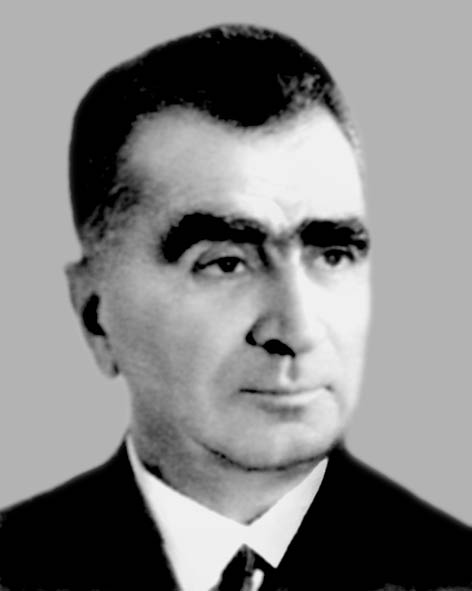
Isaac Yulievych Barenboim — head of the “Mostobud No. 1” company
I. Yu. Barenboim · prominent Ukrainian bridge builder

In 1953, after several years of assembly, the Yevhen Paton Bridge opened in Kyiv — the world’s first all-welded bridge crossing, 1,543 metres long. The Paton Institute of Electric Welding and MOSTOBUD No. 1 worked on it together, and that joint effort sealed the company’s reputation as a team that takes on engineering challenges with no precedent.

In 1957 the Park pedestrian bridge appeared — a suspension structure linking the Dnipro descent with Trukhaniv Island. In 1965 the Metro bridge across the Dnipro was completed, with an exit onto Venice Island — a combined two-tier crossing for metro trains and road traffic.

In 1962 the department was renamed “Mostobud No. 1”, headed by Isaac Yulievych Barenboim — a name inseparable from an entire era of Ukrainian bridge building.

In parallel, regional bridge units of the company worked across the country. A team led by prominent Ukrainian bridge builder Lev Heorhiyovych Kareli, in 1958—1964 built the Varvarivskyi (Southern Bug) bridge in Mykolaiv — the only structure in Ukraine that opens horizontally, rotating 90° around its own axis. In 1966, the Central (New) bridge over the river opened in the city of Dnipro.

1970—80 1970—1980s

Major crossings of major rivers

The 1970s became the era of large-scale highway crossings. In 1976 the Northern bridge in Kyiv was put into operation — one of the first cable-stayed bridges in Eastern Europe, with a then-record span of 300 metres without intermediate supports.

In 1981 the Inhul drawbridge in Mykolaiv started operation, built by the same team — until 1996 it had the largest movable section in Europe. In 1982 the Kaidatskyi bridge, the longest bridge in Dnipro at 1,732 m and one of the longest in Ukraine at the time, opened after seven years of construction.

In December 1985 the Antonivskyi highway bridge over the Dnipro was officially opened in Kherson — 1,366 metres, 30 spans. It was built by the Mykolaiv bridge construction unit of MOSTOBUD No. 1.

The decade closed with Kyiv’s Pivdennyi bridge (1990 — road traffic, 1992 — metro): a cable-stayed structure with a single 115-metre pylon, designed by architect A. Havrylov and a team of engineers led by H. Fuks. With its right-bank interchange, the Pivdennyi bridge remains one of the country’s largest bridge projects.

1990—2010 1990s — 2010s

Independent Ukraine

In 1993 the company was reorganised into “Mostobud” — the largest bridge-building company in Ukraine and the wider region. That same 1993 marked the start of construction of the Podilsko-Voskresenskyi bridge crossing in Kyiv — an object the company worked on as general contractor until 2018.

In 1998 the cable-stayed bridge at the entrance to the port from the Military descent opened in Odesa — at the time, an unprecedented project for Ukraine, with a 115-metre span at exceptionally low construction height. In 2001—2002 reconstruction was carried out at the same port’s Quay No. 29, with dredging to 13.5 m — one of the longest quays in the country.

In 2004—2005 MOSTOBUD delivered a complex of 26 objects on the Kyiv—Odesa highway. In 2007 — five objects on the Kharkiv—Simferopol—Sevastopol motorway and the bridge at the entrance to the Kyiv sea port.

In 2010—2011 the company took part in completing the Darnytskyi rail-and-road bridge crossing in Kyiv — the widest bridge in the capital (43.8 m), with two railway tracks, six lanes for cars and two pedestrian walkways.

2020— 2020s

“Big Construction” and new challenges

Since 2020 MOSTOBUD has been working as a contractor for the state programme “Big Construction”. The list includes reconstruction of the arch bridges over the Southern Bug in Vinnytsia, the viaduct of the bridge over the Dnipro in Kamianske, viaducts in the Carpathian mountains, repair of bridges and overpasses on the M-04, M-15, M-21 and other motorways.

A separate chapter is the Zaporizhzhia bridge over the Dnipro and the Old Dnipro, which took more than twenty years to build, with the beam section opening in 2020 and the cable-stayed section in January 2022.

February 24, 2022 changed everything. The war destroyed parts of the bridges MOSTOBUD had built for decades: the Antonivskyi bridge in Kherson, crossings in the south and east of the country. What for others is strategic infrastructure is, for our company, a personal story — because our engineers, our teams, our parents and grandparents worked on them.

Today MOSTOBUD GROUP is more than 5,000 employees, production facilities covering virtually every stage of the construction cycle, and direct involvement in the country’s reconstruction. We are building the crossings of the new Ukraine: where others see ruins, we see foundations.

“A bridge is not just a way across the water. It is a promise to come back.”
from a bridge-builders’ address, Kyiv, 2024

Each named bridge is a separate card in our project catalogue.

Open the projects catalogue →